Ask a big question
“Can something be important even when we cannot see it?”
Let your child share an idea before you offer an explanation. It’s fine to say, “Let’s find out together.”
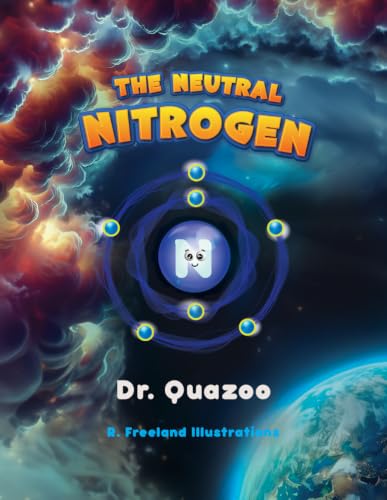 Cover illustration by Rose Freeland
The Molecule Series · Book 04
By Dr. Quazoo · Illustrated by Rose Freeland
The fourth and final adventure in the Molecule Series introduces nitrogen. Complete the collection and keep exploring the elements that connect our planet and living things.
Current editions, pricing, and availability are provided by the retailer.
Why share this book?
Close the four-book collection with an element that is all around us. Nitrogen provides a starting point for exploring the atmosphere and the connections between air, plants, and living things.
Revisit Hydrogen, Carbon, and Oxygen. Ask your child to name one thing they now wonder about each element. Curiosity is a better finish line than a quiz score.
Atomic number = the number
of protons in an atom
The science behind the story
A nitrogen atom has seven protons. Nitrogen gas makes up about 78% of Earth’s atmosphere. It usually occurs as N₂, with two nitrogen atoms joined by a strong triple bond. Nitrogen is also a component of proteins and DNA.
An electrically neutral atom has equal numbers of protons and electrons. That is different from saying a substance never reacts: nitrogen can form many compounds.
Beyond the pages
Supplementary ideas for your family’s reading time.
Ask a big question
Let your child share an idea before you offer an explanation. It’s fine to say, “Let’s find out together.”
Try a simple activity
Draw a grid of 100 squares. Colour 78 for nitrogen, 21 for oxygen, and one for other gases. This is an approximate model of dry air. Ask which gas there is most of, and what the model leaves out.
Keep the discovery going
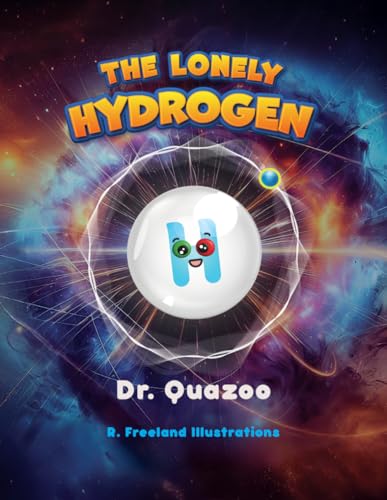
Atoms & the universe
Explore the book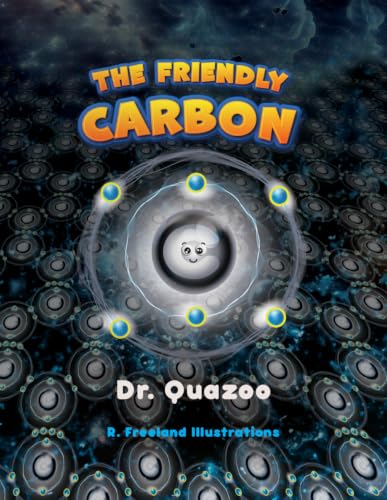
Connections & the chemistry of life
Explore the book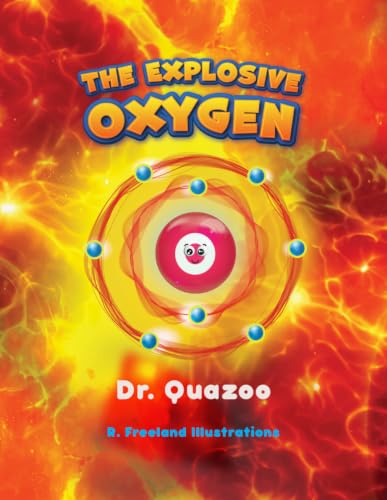
Air, energy & reactions
Explore the book